In some instances, it may be possible to self-administer these shots
No B12 deficient patient wants to have more injections than they need, they simply want a frequency that keeps them well and completely able to function
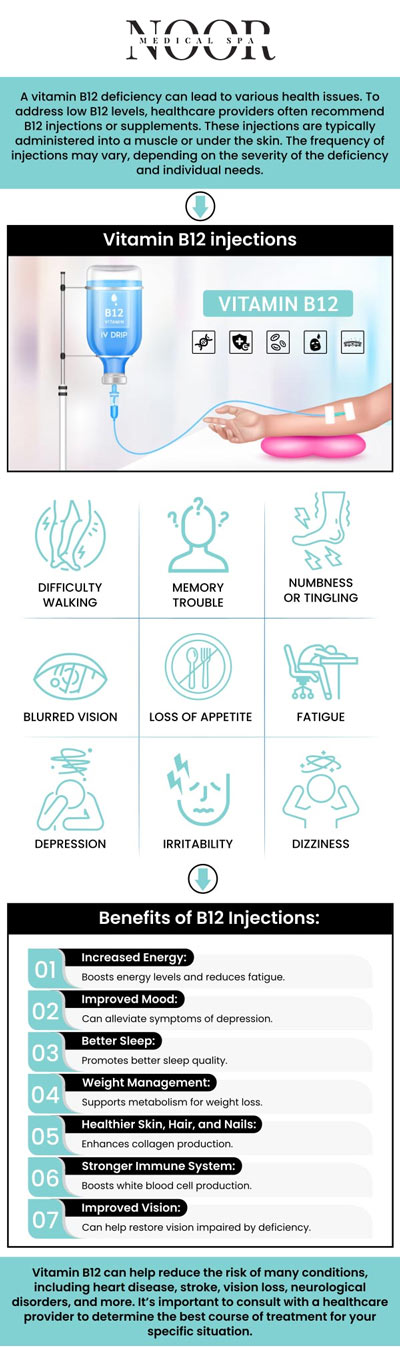
Understanding a vitamin B12 deficiency Vitamin B12 is also known as cobalamin, And it plays a vital role in cell metabolism, red blood cell formation, DNA production, and nerve function
Vitamin B12 shots are often prescribed for people with: Pernicious anemia (autoimmune destruction of intrinsic factor needed for B12 absorption) Gastrointestinal surgeries (e.g., gastric bypass, ileal resection) Crohns disease or celiac disease Chronic alcoholism Long-term use of acid-reducing medications Vegan diets without supplementation Infants or children with congenital absorption disorders (i.e., vitamin B12 for kids in clinical care) Injections ensure direct delivery into the bloodstream, bypassing the digestive system entirely
It's more invasive, certainly, potentially leading to discomfort, site reactions, and requires specific training for proper administration
Many are unsure if they are at risk of a vitamin B12 deficiency, if you are wondering if you are or what the symptoms may be to look out for, individuals with a vitamin B12 deficiency may include: Elderly Anyone who may have had previous surgery that included removing part of the bowel that absorbs vitamin B12 Any individual on metformin for diabetes Anyone that is following a strict vegan diet Anyone taking long-term antacid medication for heartburn What is Vitamin B12